Background

Since the days of my management education in graduate school (many many years ago), more so after I had a class on Business Ethics, I started to think about business and personal mangement from a different perspective. While staying focussed on the goals, it is very important to have one very fundamental value as the basis to drive the day to day approach to management. If this fundamental value is the same for personal and professional management, one's life becomes very consistent. This fundamental value in my opinion is positive energy. In a world where it is easy to get sucked into very simple negative habits like "talking behind someone" to very disastrous negative engagements like terrorism, it is important to realize that it is very possible to learn and master the skills to stay positive and reap success. This blog is my small effort to impart these techniques to acquire, sustain and weave in positive approaches into our lives. I will focus more on professional management techniques for the corporate world, however, I will also discuss personal management techniques to break up the monotony.


Tuesday, February 24, 2009

Appreciate sincerely and often


All hard work feels good when it is appreciated. Appreciation does not have to be expensive and elaborate. This is probably why most people do not do it as frequently as they should. It can be as simple as a verbal thank you. Effective appreciation needs to be sincere. True expressions of appreciation must be crafted appropriately for the receiver. The receiver must be made aware that their efforts are valued. This cannot be mechanical, because repetitive behavior gets ignored very easily. Each expression must be crafted with attention. As much as possible, the details of the effort must be understood, and the impact of the delivered result must be understood. The message must convey how each aspect of the effort relates to the big picture. This will also invoke greater ownership among the team as well. Sincere appreciation in difficult situations involves being a part of the team, feeling their pain and helping to ease that. Appreciation is the best form of positive reinforcement. More frequent the appreciation, more loyalty we will be able to build up. And this is key to getting things done... as a manager.

The key aspect of every performance review is to summarize the continuous assessment of the team member. This is a prime time to emphasize the positives first. Emphasizing the strengths and contributions at this time fills the team member's heart with good feelings about what they are doing. Then, their mind becomes very receptive to discussions relating to improvement.

This is a valuable lesson that I learned from my wife, and I'm reminded everyday by my 18 month old son's appropriately placed "Goo Job!" praises for actions around him.

Thursday, February 12, 2009

Believe in people and expect the best from them


When we consistently believe in the capabilities of our team to achieve and deliver, then we will treat them with respect, encourage them, and appreciate them whenever possible. This will produce the results as per our belief. This whole positive effect is usually referred to as the pygmalion effect. There is a very good write up about this by Eric Garner that is worth reading rather than me explaining it here.

Sunday, February 01, 2009

Understand the strengths of others


A personal journal of positives (as indicated in my previous blog) reinforces a "can-do" attitude in us. But, this is sufficient as long as we are individual contributors. As a manager, we need to get things done using our teams. For this to work effectively, we need to take the time to understand the positives/strengths of each member of our team. Then, we need to focus on how we can appropriately provide proper assignments to each team member that mostly utilizes their strengths. This way we will be setting them and ourselves to succeed. Ideally, we should have identified the strengths of each team member at the time of hiring them and we should have made sure that the team is diverse enough to meet the goals.

Saturday, January 03, 2009

How to build a positive mindset


Now that I have written my bits on "what" and why", it is now time to start looking at the "how". Since this is a big topic with a lot of different techniques, the "how" will be series of notes. This is the first one in that series.

To build a positive mindset, we must fill our mind with positive episodes from our own lives. This will be reassuring to us, that positive things have happened to us and can happen again. Example of positive episodes could be as simple as how hard we worked on a science project in middle school to get everybody to admire us or as big as how our positive attitude helped us recover well from a serious medical condition. A very simple exercise to fill our minds of this is to start writing a personal journal describing our approach, our thoughts and our pride associated with each episode, one episode at a time. The frequency of this writing can be up to each individual, just frequent enough to not let the positive attitude fade away. I would recommend atleast once a week. As mush as possible, we must try to reflect on the episode that we just wrote until we write the next one. The more we think about it, the better we will feel and the better we feel, more likely we will be to focus on the positives around us and not get bogged down by the negatives.

This approach is a great a confidence builder, and it puts us in control of building up our confidence level. We are the only one who know all about us and we must take charge of our ability to perform optimally, everyday.

Sunday, December 28, 2008

Why Positive Management?


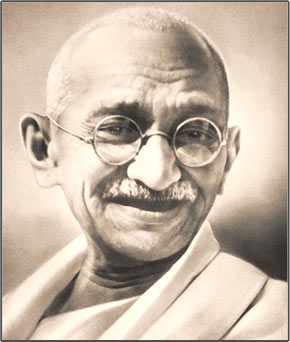
Clarity of thought is key to sound decision making. Having one central value to drive decisions provides an easier path to clear thinking. Optimism is the essence of any growth oriented strategic planning. Optimism is the manifestation of internal positive well being. Productive synergy is the natural outcome of a happy team, and happy teams are made up of appreciative members and an encouraging leader. From Mahatma Gandhi's principle of non-violence to Dr. Randy Pausch's last lecture, history is full of examples of positive means to achieve results. These are result oriented acts that one can be proud of for a long time to come.

Saturday, December 20, 2008

What is Positive?

Positive energy leads to the creation of win-win situations.

A picture that stays in mind from my childhood days is of the 3 monkeys that represent "Hear no evil, see no evil, speak no evil". I would like to add to this... do no evil. This is another way to explain positive.

In the words of Thiruvalluvar, positive is "Inna seidaarai oruthal ,avar naana nannayam seithuvidal". This tamil aphorism means "How will a man punish those who have done injustice to him? By doing good back to them and shaming them". with his kindness"

Sunday, December 14, 2008

Understanding negative sentiments - the cause of problems

People are full of positive energy by default, and this is the natural outcome of any human action. Negative actions are usually uncontrolled reactions to unavoidable circumstances of difficulty. The keywords here are uncontrolled and reaction. Could these reactions be more of actions and can they be controlled by rational human thought process? Absolutely!

Negative actions are easier solutions in difficult situations. They require relativley less thought, courage and time. Because of the level of thought involved and rash nature, they usually gain support and momentum faster. They are a very powerful destructive force in any professional/social organization.